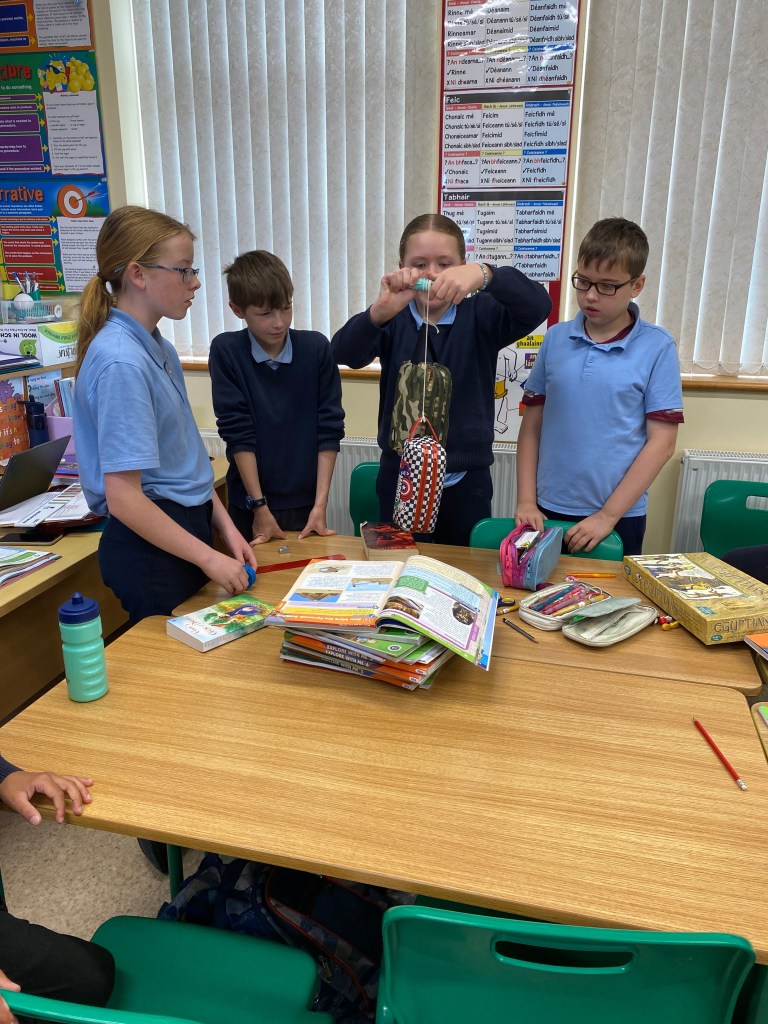
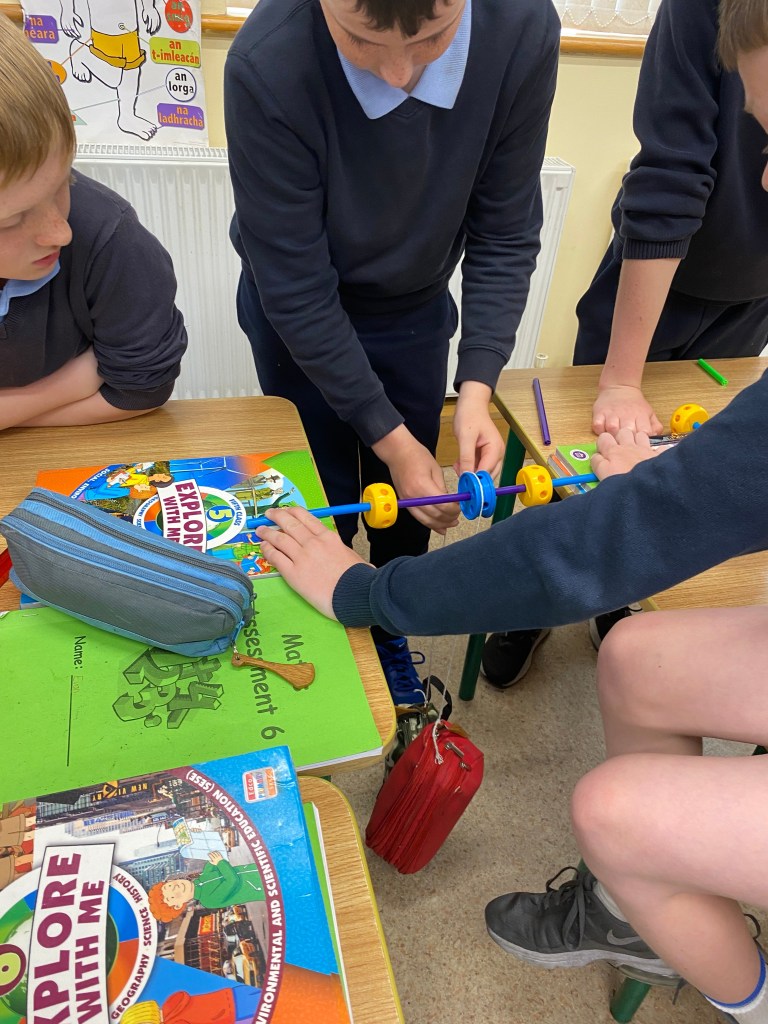
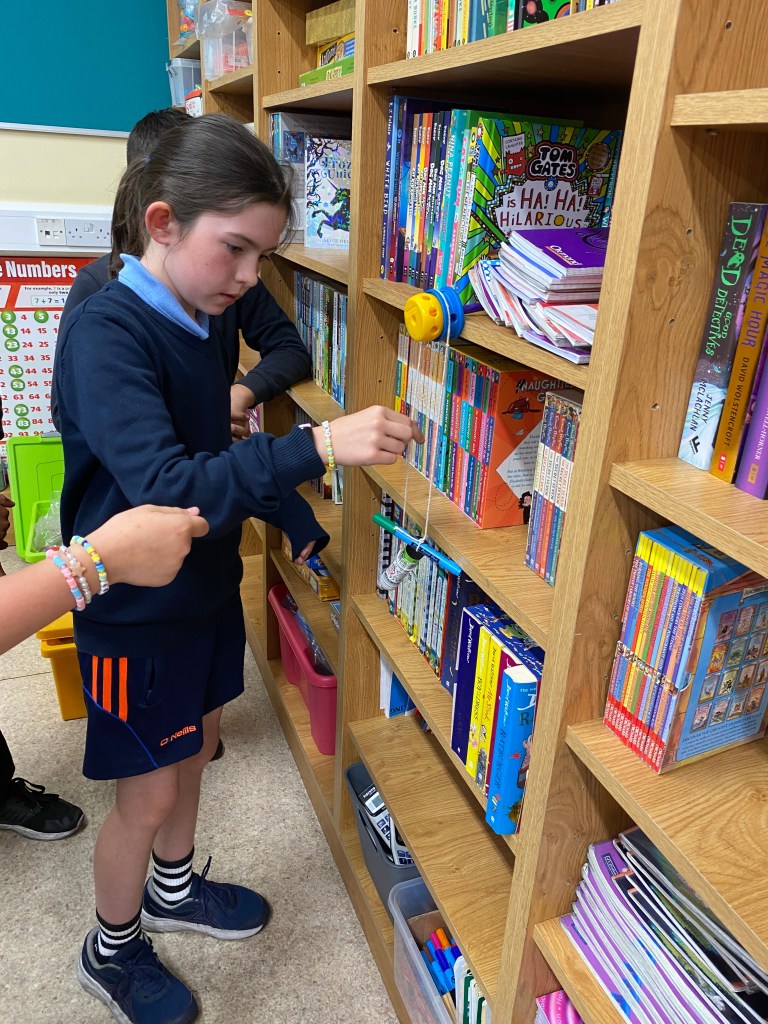
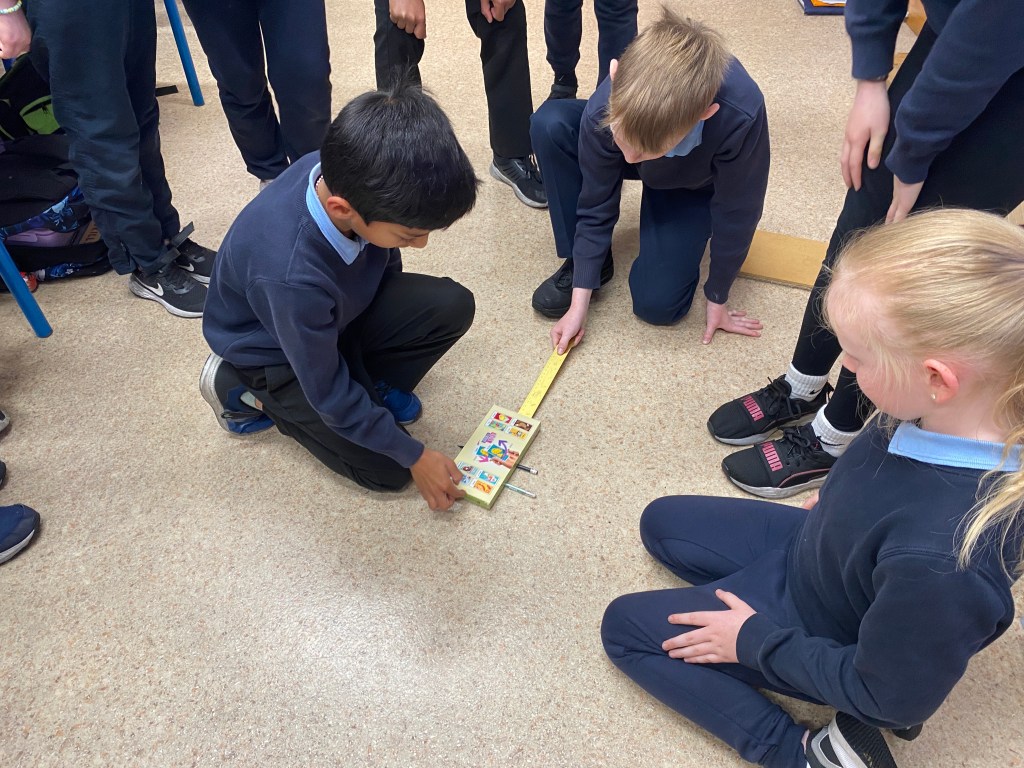
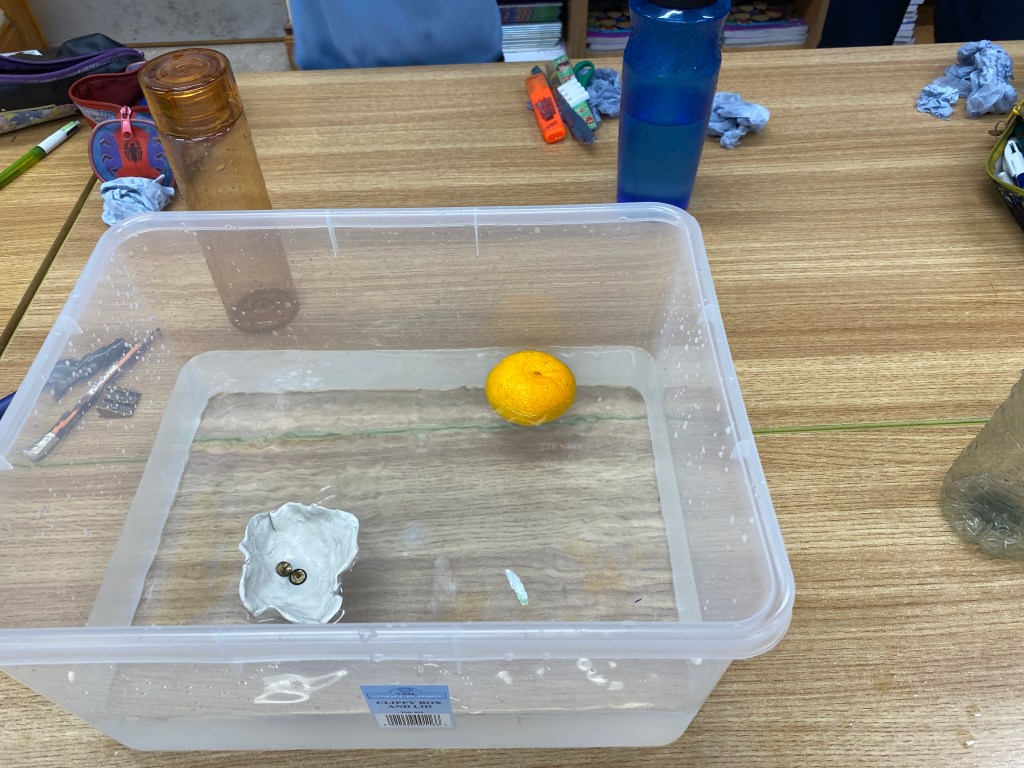
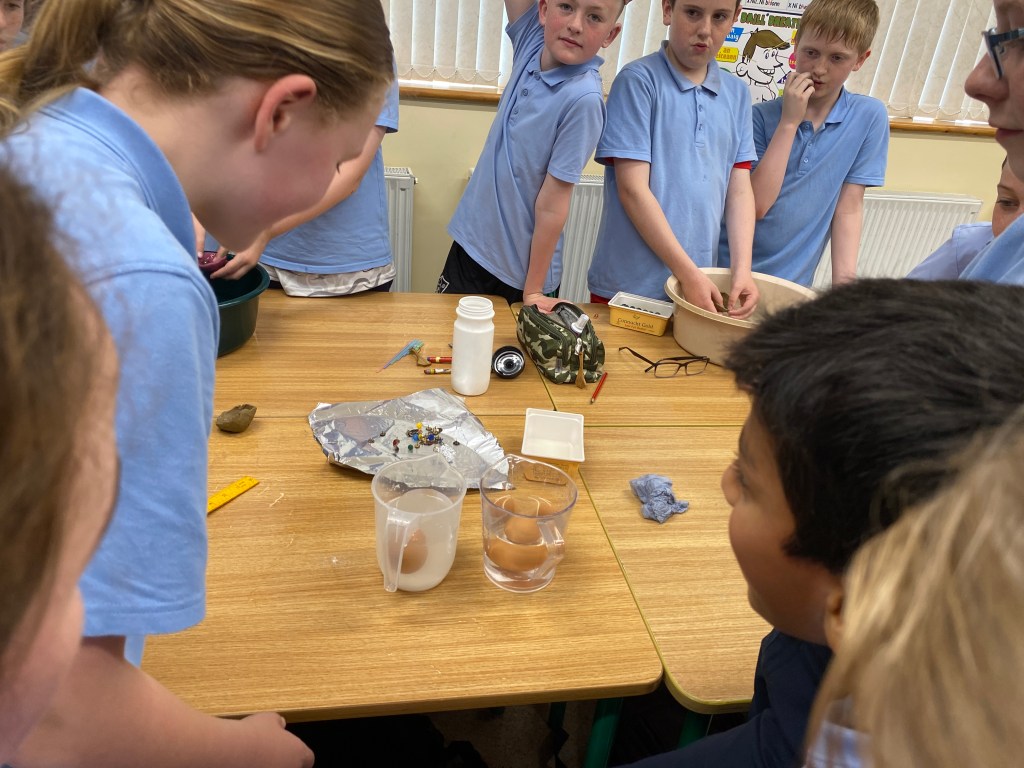
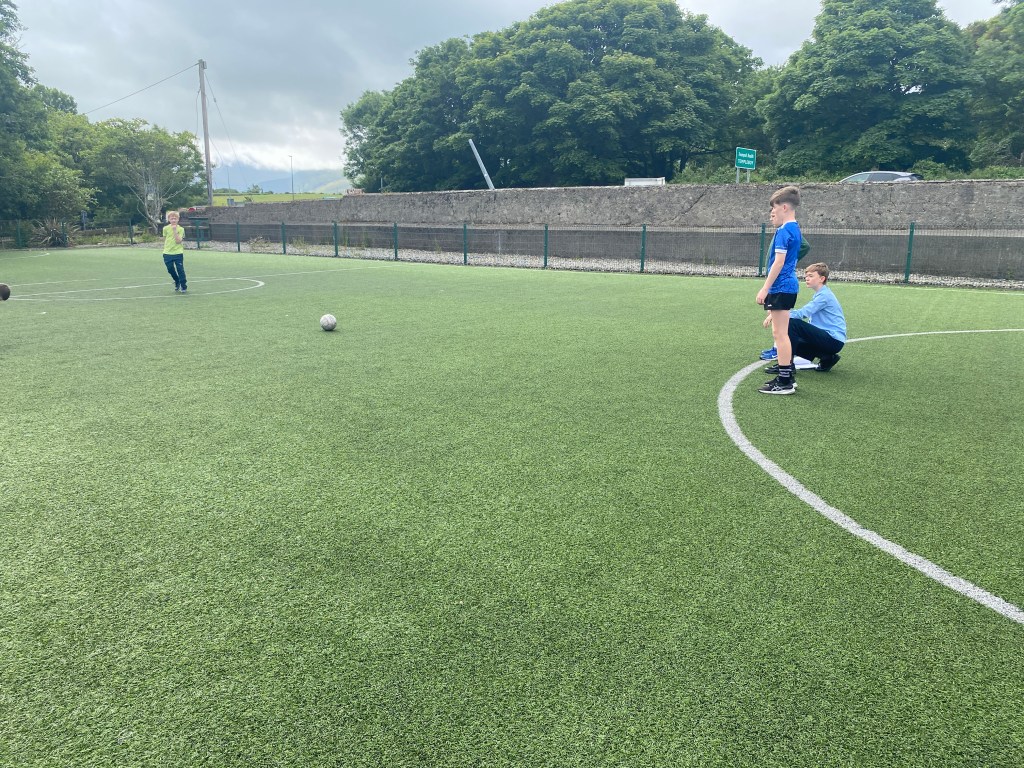
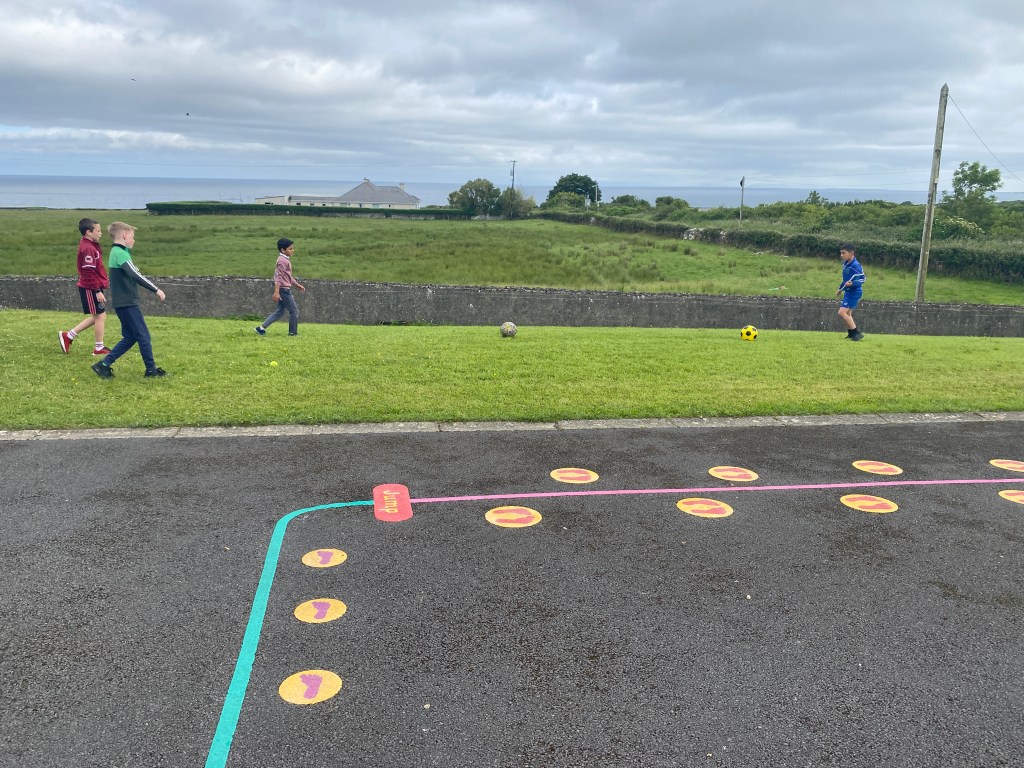
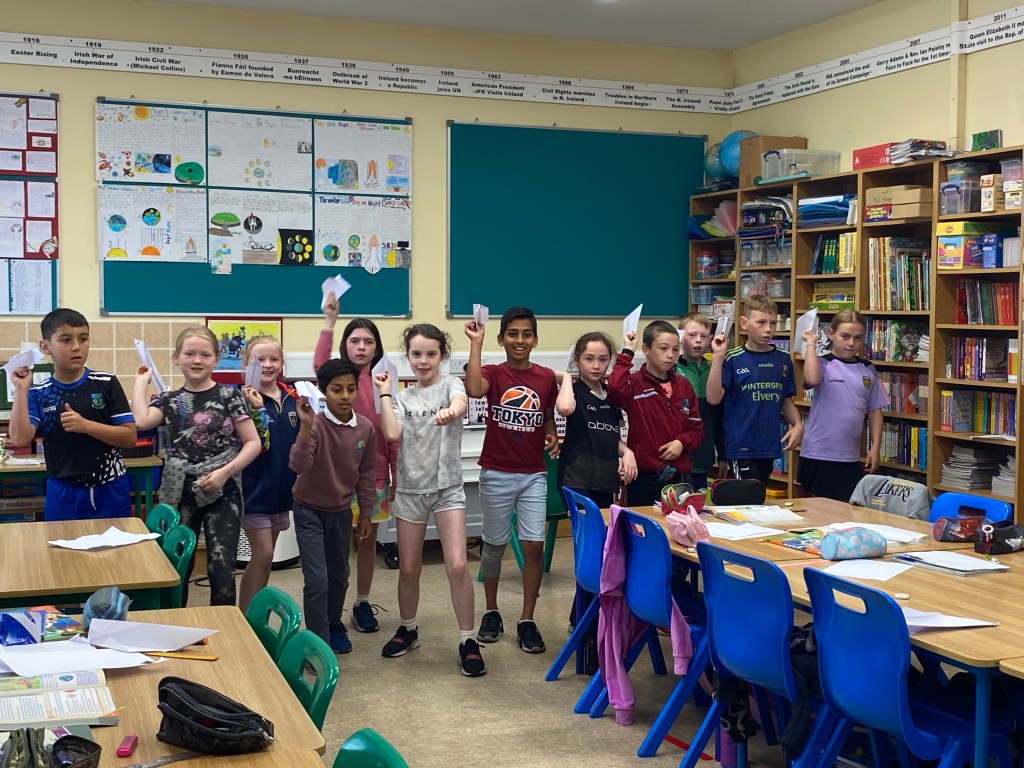
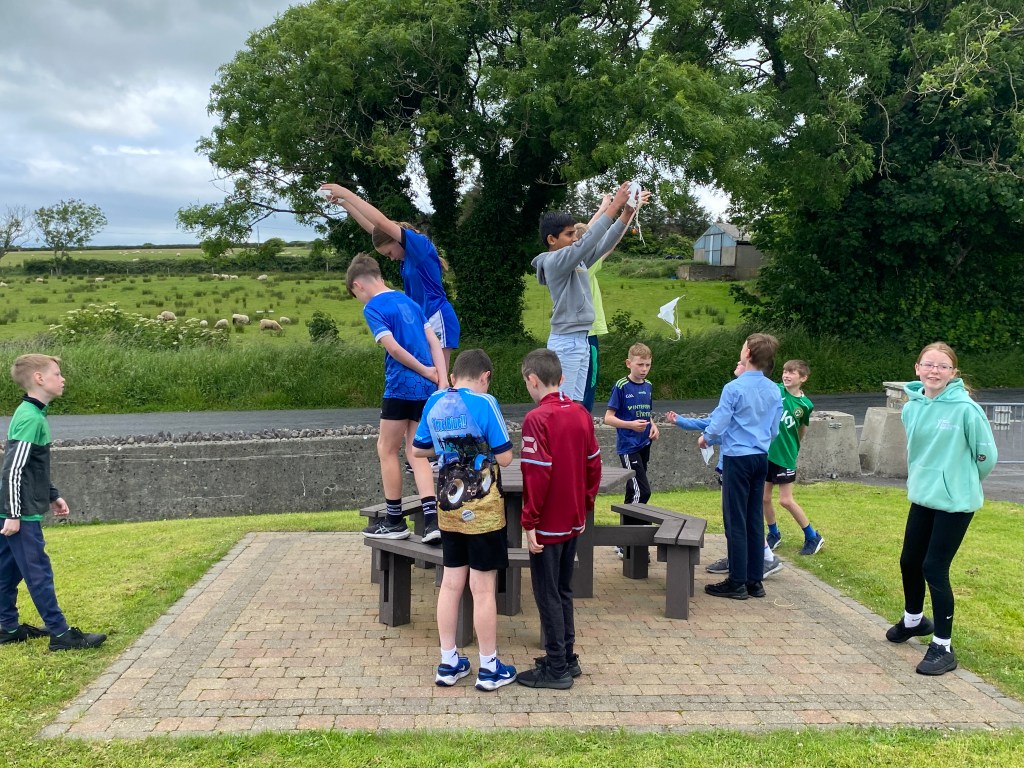
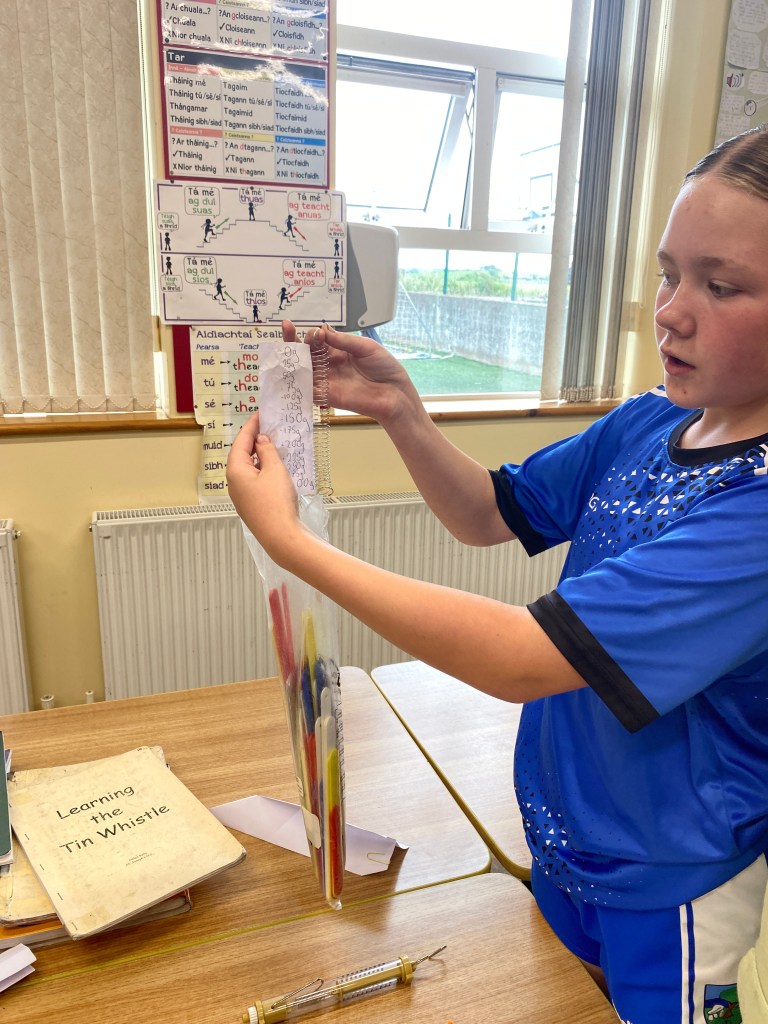
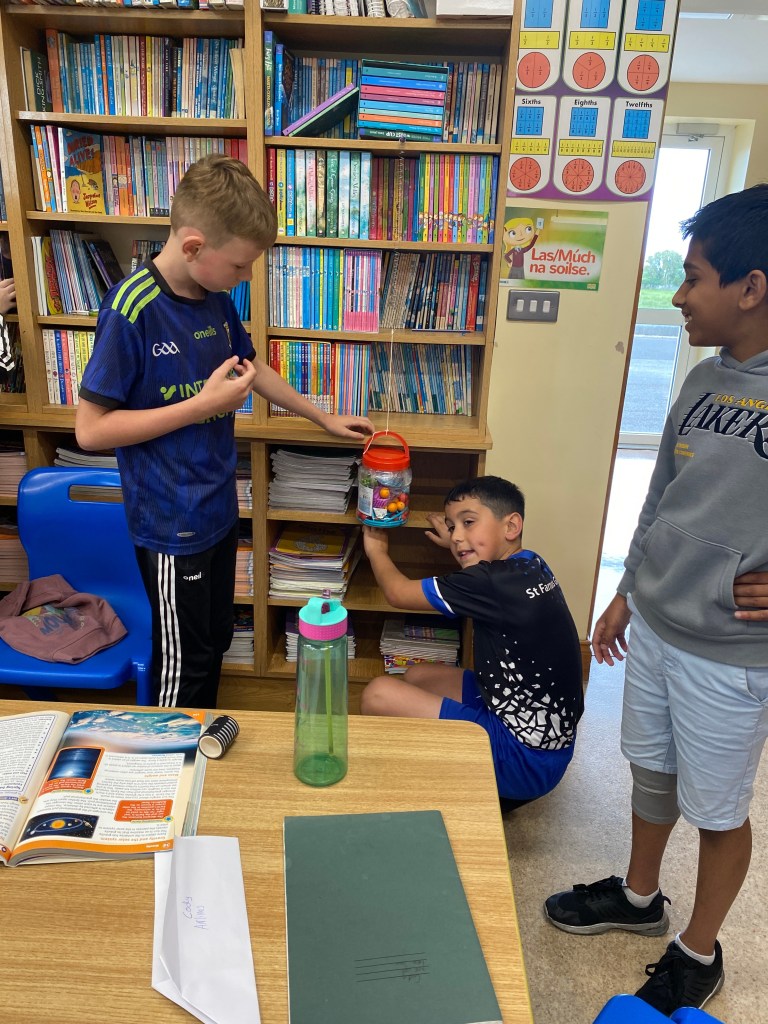
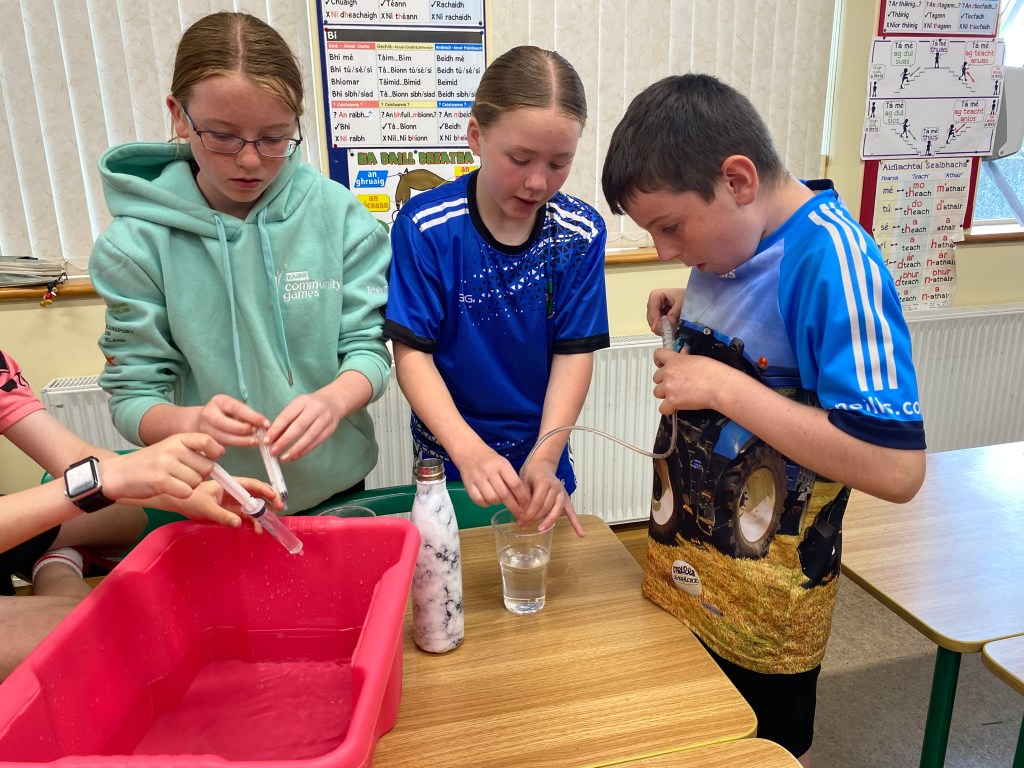
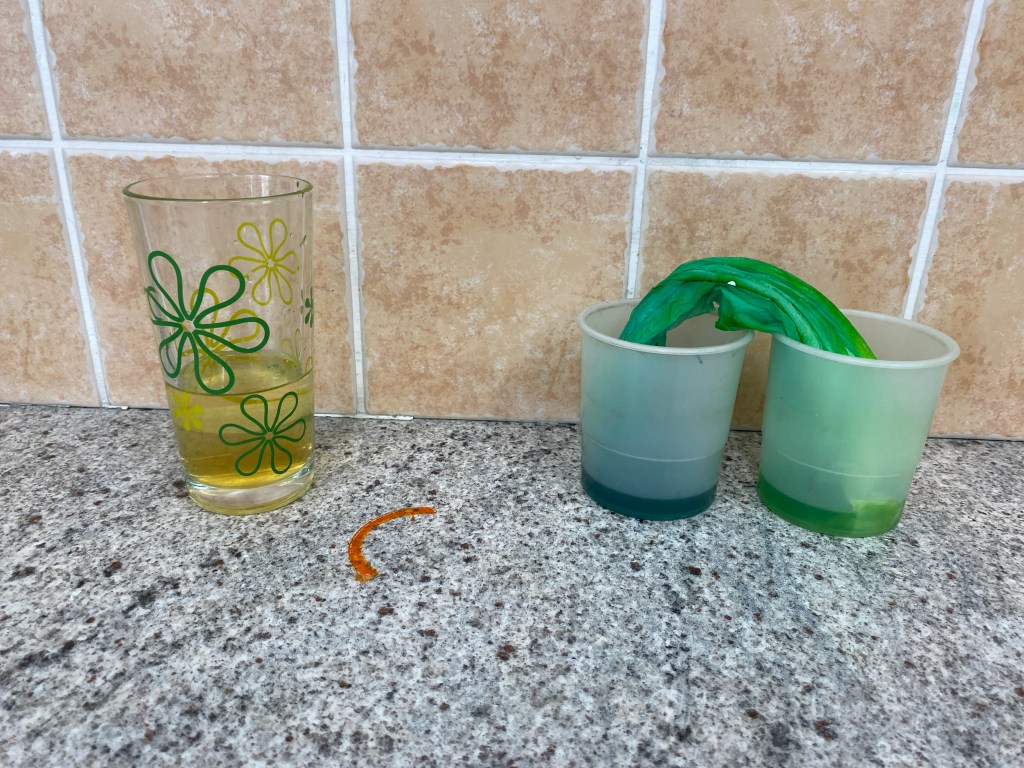
Recently, we have been working on “Forces” in science. First of all, we identified and explored various push and pull forces in addition to exploring gravity and how it constantly pulls objects towards the Earth. To investigate this in action, we dropped different objects and observed how they fell at the same rate regardless of weight. We also explored Isaac Newton’s work by using Newton force meters to measure the force (in newtons) needed to move different objects. Using rulers and coins, we investigated how levers work and we discovered that by moving the coins on one side of our seesaw we could make different-sized loads balance. We also constructed simple pulley systems. We explored friction by investigating how different surfaces impact the distance a ball or a car will travel. By rubbing our hands together, we discovered that friction generates heat. We had lots of fun exploring centripetal force by spinning an upturned bucket of water over our heads. We explored air resistance as a force that slows things down, by running outside while holding sheets of paper. We noticed how larger surface areas catch more air and therefore, reduces speed. To reinforce this concept, we designed and tested our own parachutes. Next, we explored floating and sinking and we identified factors such as density and shape as influencing whether an object floats or sinks. We conducted experiments on displacement, observing how water level rises when objects are submerged, and linked this to buoyancy and the idea that an object floats when it displaces a volume of water equal to its weight. We also explored hydraulics, and capillary attraction. To complete our work, we built model cars using cardboard, axles and wheels and we enjoyed giving them a test drive! Throughout all our activities, we learned lots about forces, while also practising important scientific skills such as asking questions, observing, making predictions, investigating and experimenting, estimating and measuring, recording and communicating, and finally analysing when we worked on interpreting our results.