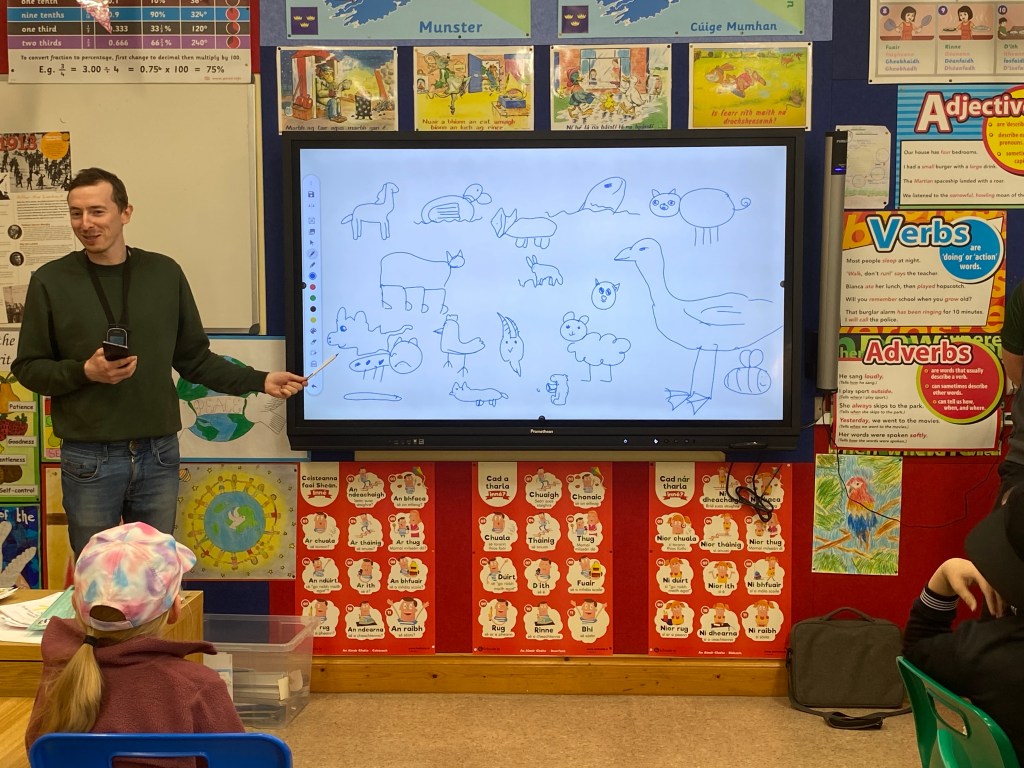
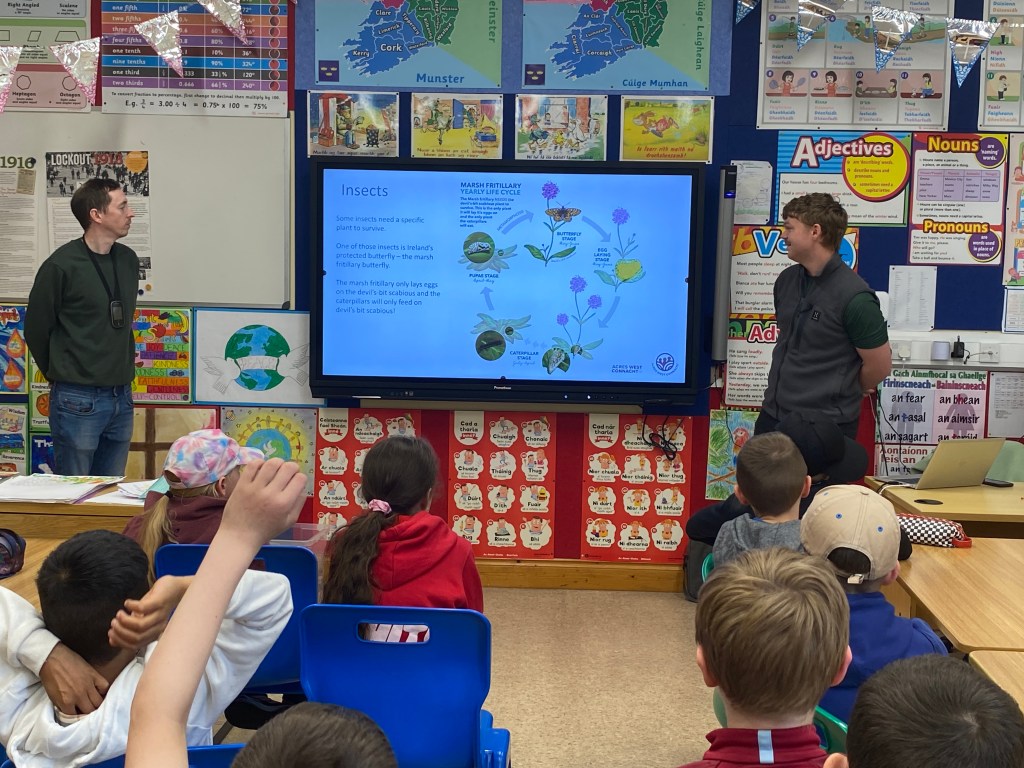
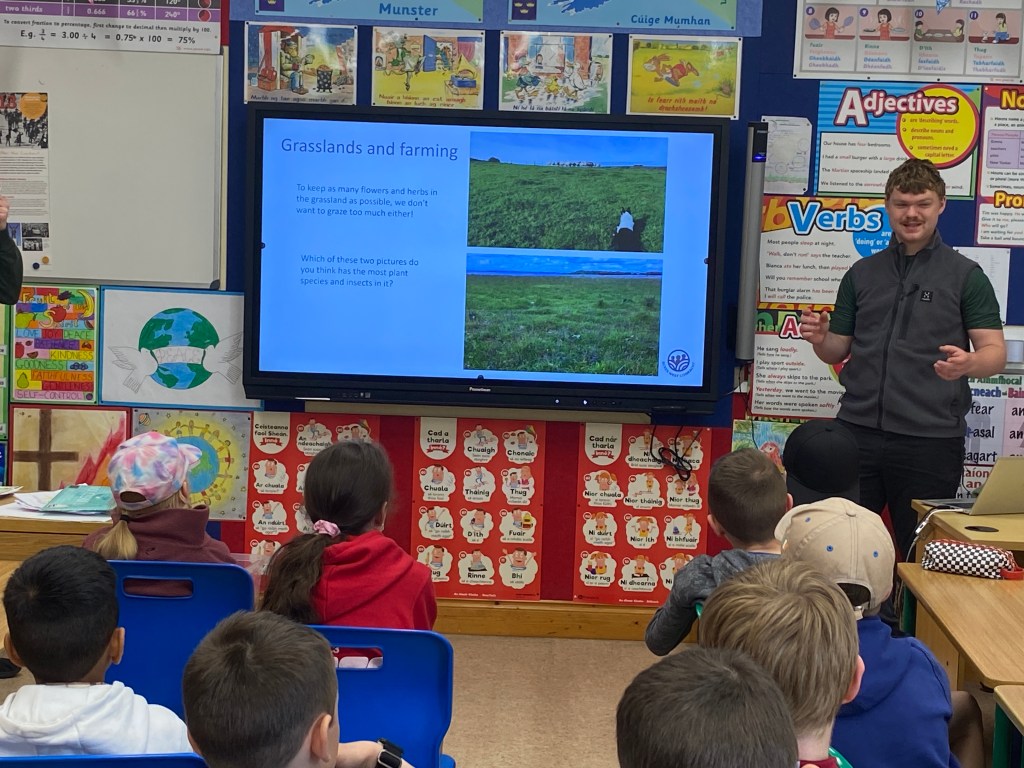
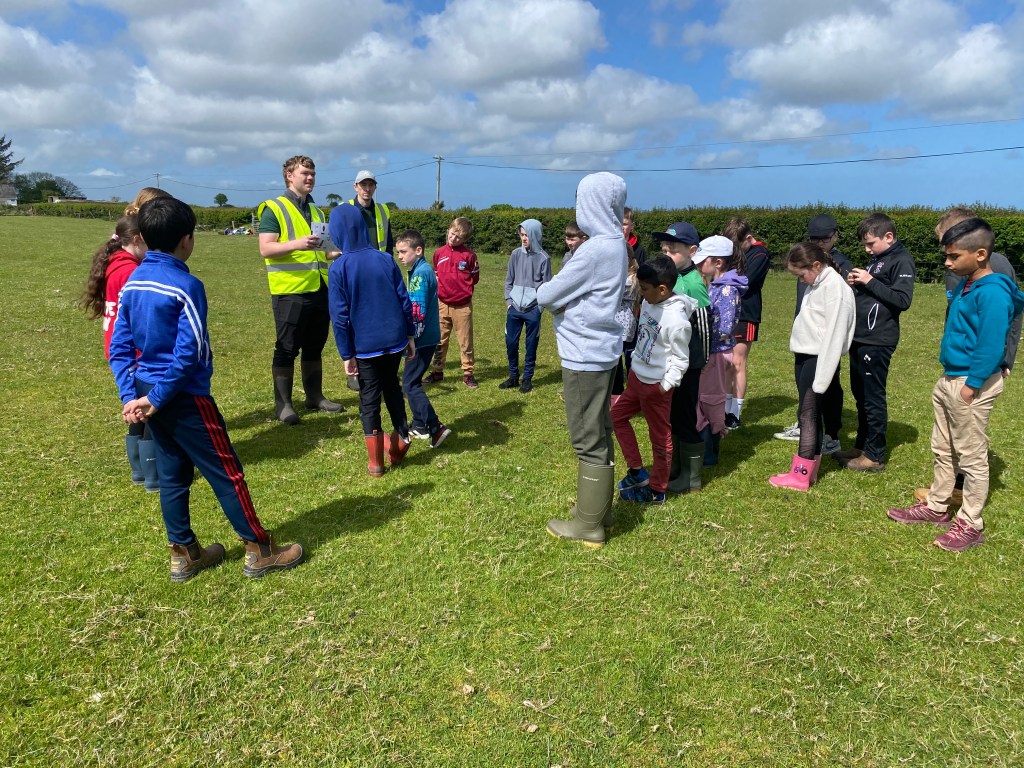
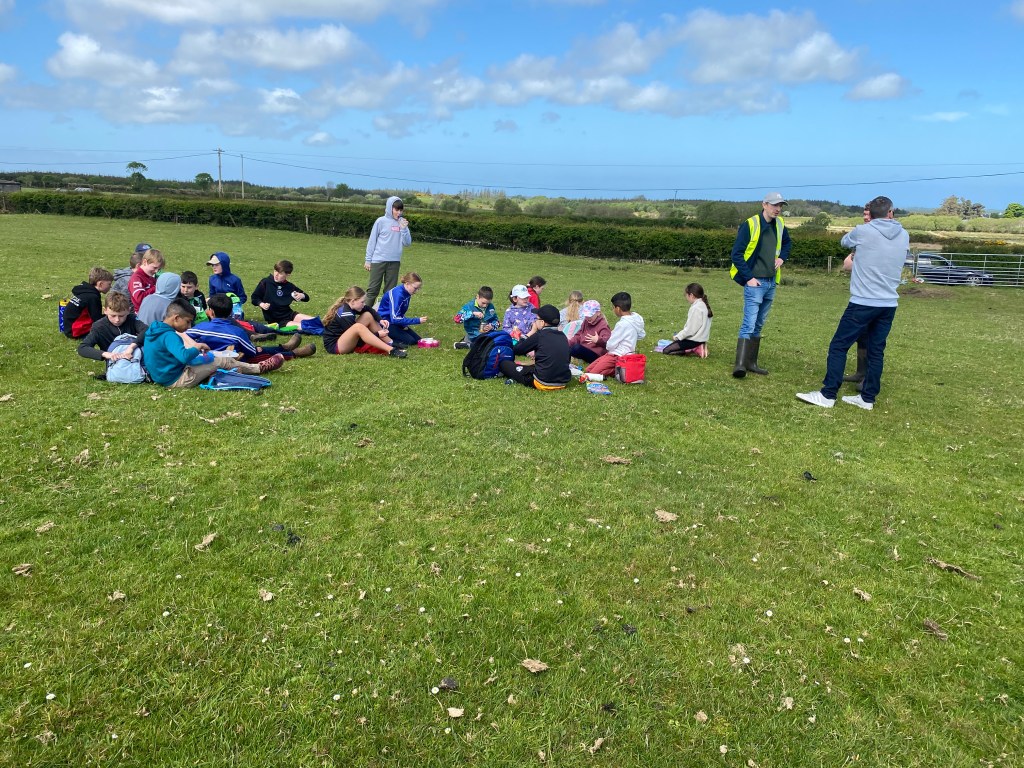
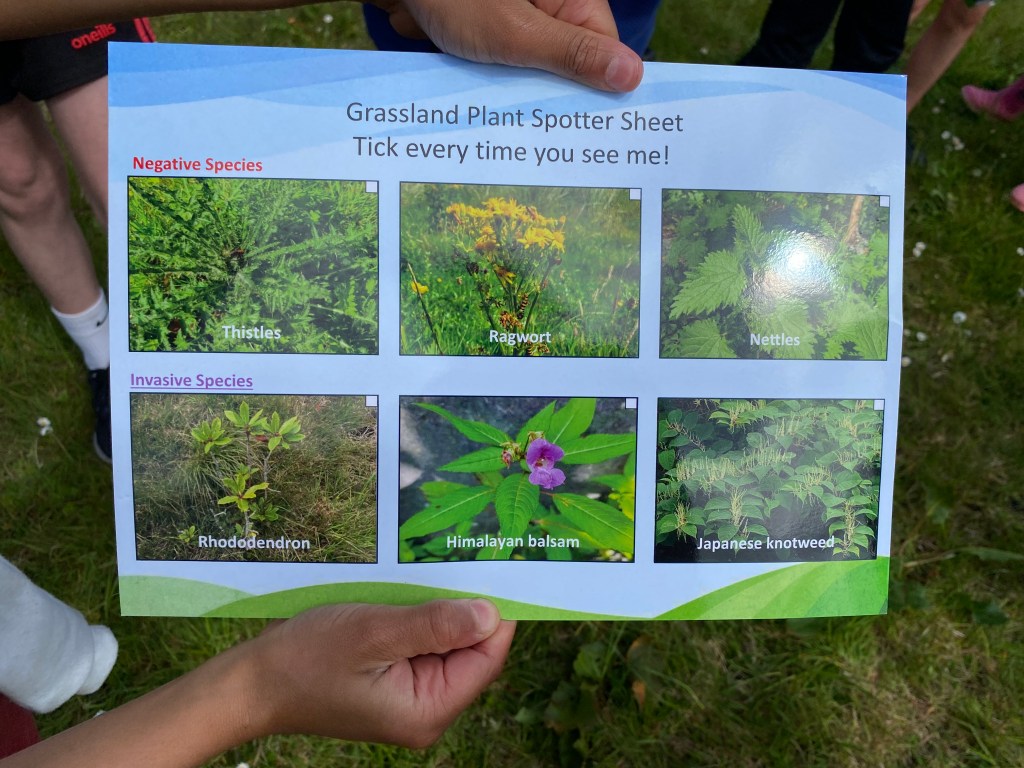
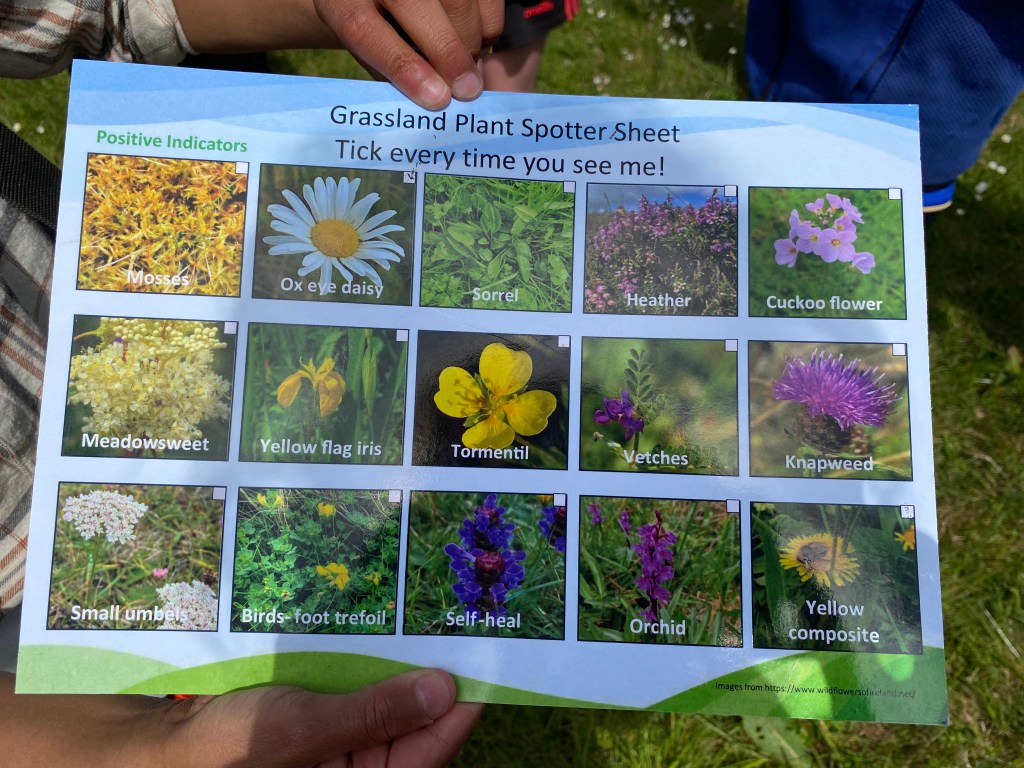
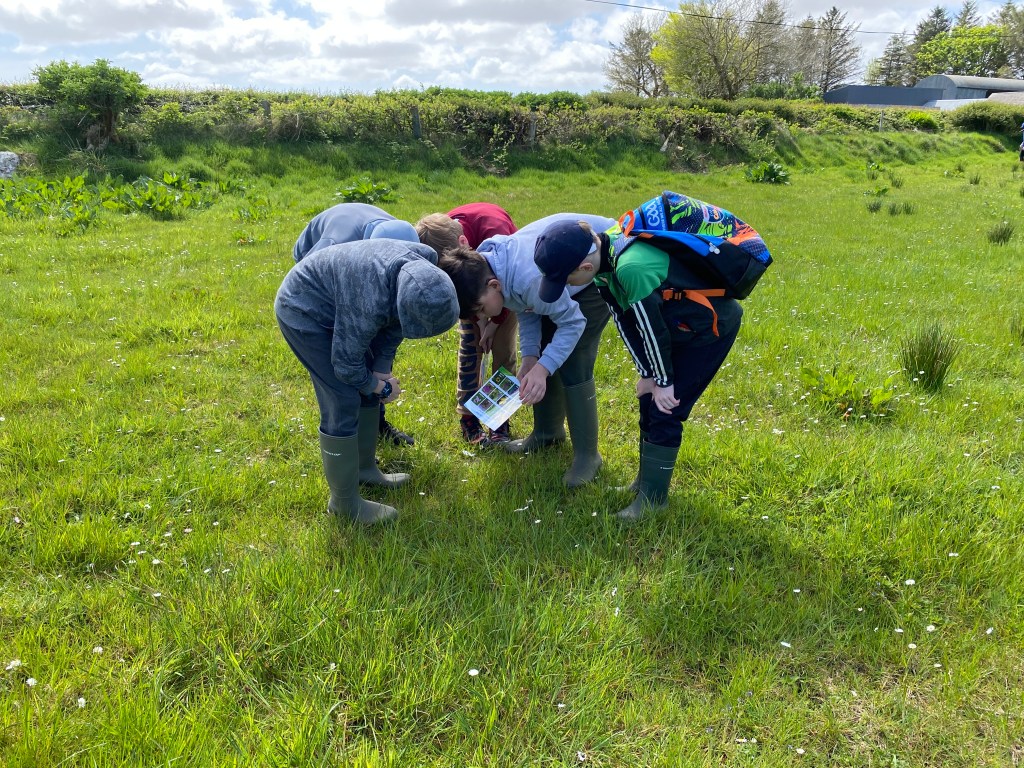
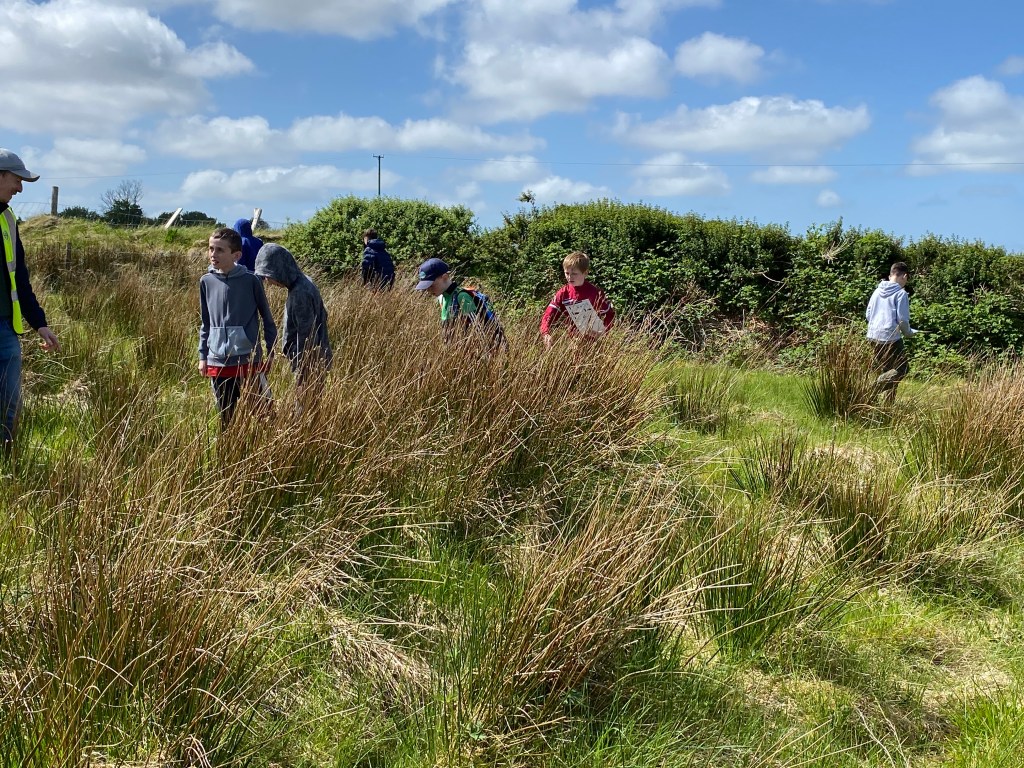
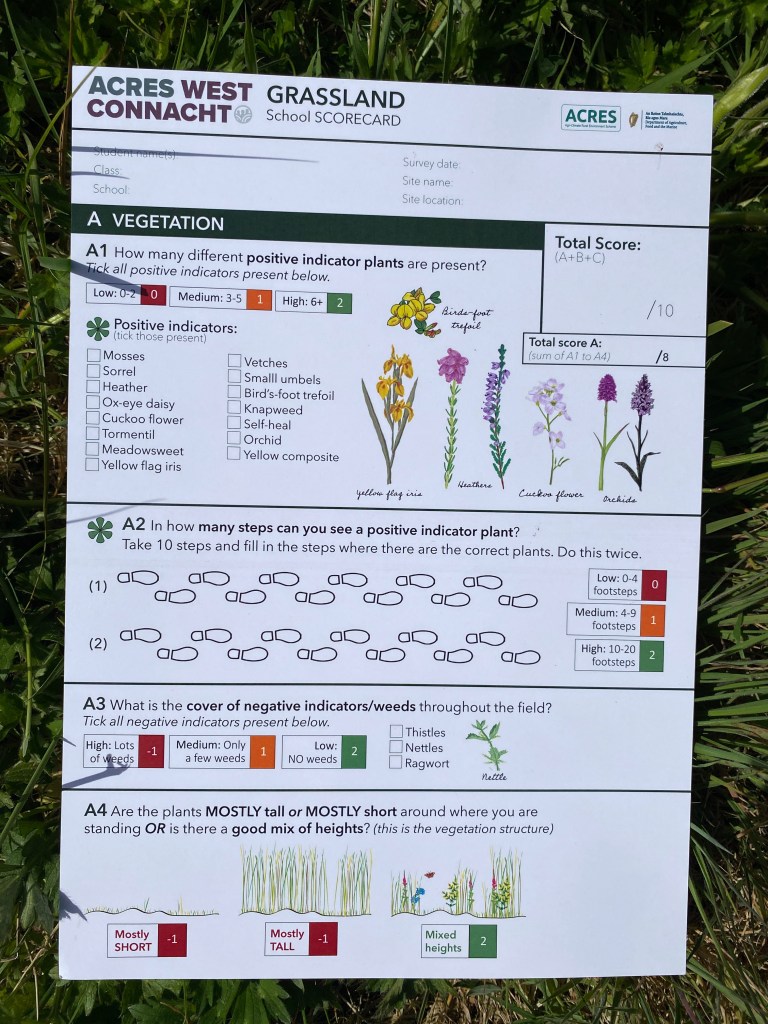
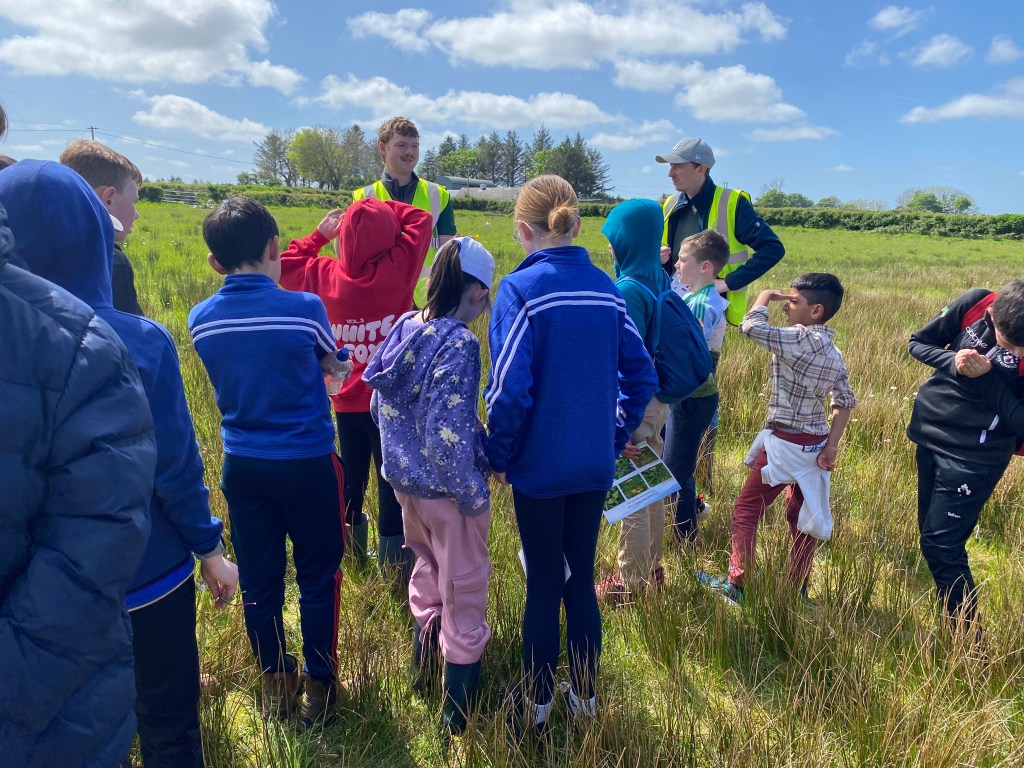
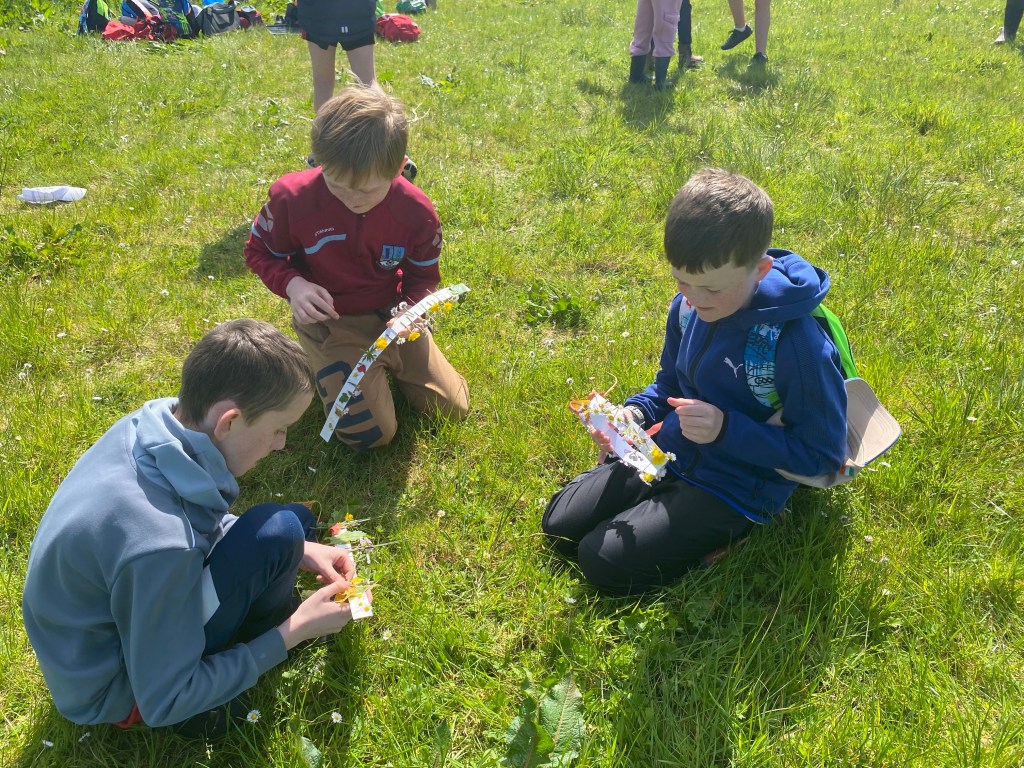
This year, we have enjoyed exploring lots of local natural habitats with our most recent being a grassland habitat under the excellent guidance of Michael and Gerard from Acres West Connacht, a Department of Agriculture-led initiative which works with farmers to help protect grassland habitats for nature. Our exploration began with an in-school presentation on types of grasslands, living things found in grasslands, and grasslands for farming. We learned that grasslands are areas that are covered in mostly grass, with other herbs and flowers, and sometimes trees and bushes. Over half of Ireland is covered in grasslands, i.e. a total of 4.1 million hectares. Grasslands are a very important habitat and provide a home for a great variety of plants, birds, insects and animals. Flowers in grasslands provide food for pollinators, such as bees and butterflies. These pollinators are very important as they play a major role in the production of fruit and berries. One such pollinator is the marsh fritillary butterfly and we enjoyed observing its life cycle. Grassland also protects the soil from carbon loss to the environment as a strong cover of grass works like a protective sheet to keep carbon in the soil. We then looked at grasslands for farming and the importance of not overgrazing our grasslands. Next, Michael and Gerard introduced us to the scoring cards which are used to to measure the quality of grassland by scoring it out of 10 for positive and negative indicators. Then, with the in-class material covered, we set off to a local farm. First, we looked at hedgerows and the variety of plants, animals and insects which inhabit them. Then, after lunch and some treats provided by the landowner, we looked at the grassland and using our score cards, we scored the grassland according to its positive and negative indicators with biodiversity seen as a positive indicator and weeds or overgrazing seen as negative indicators. While exploring the grasslands, we discovered lots of plants, birds and animals, including ragwort, thistle, butterflies, ladybird, buzzard, frogs, cuckoo, buttercup, vetch, bluebell, gorse, hawthorn, chickweed, cuckoo flower, etc. We concluded our day by creating crowns made by attaching plants to a strip of sticky cardboard. This was another great day of learning and we feel privileged to have been afforded the chance to familiarise ourselves with another important local habitat.