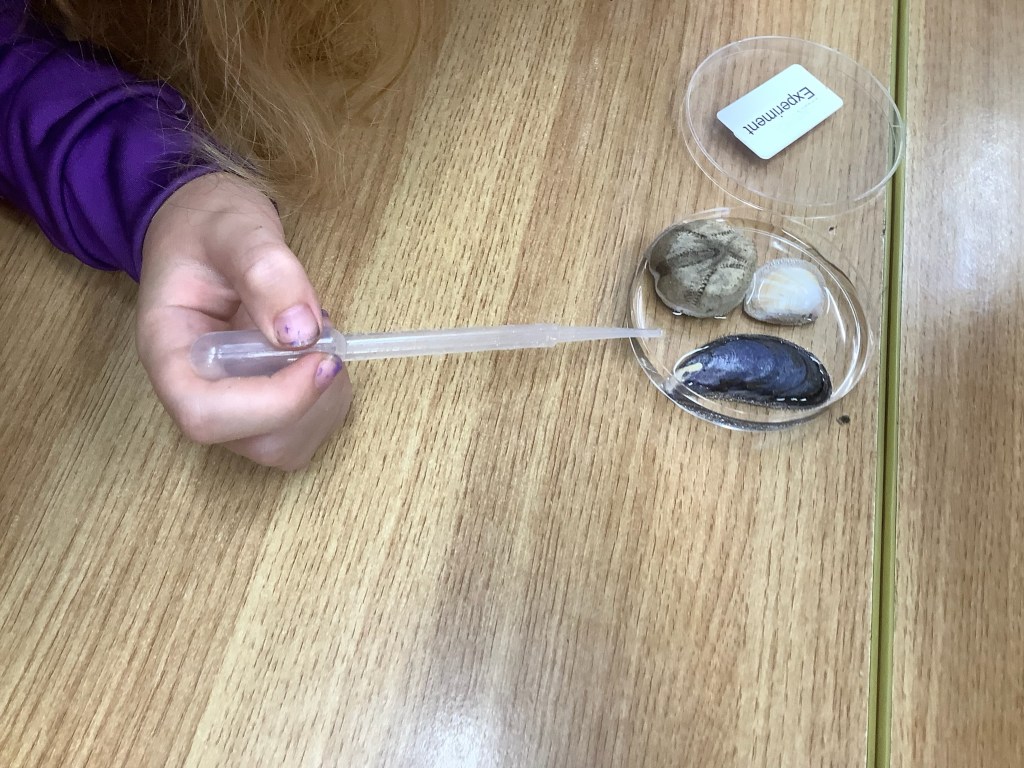
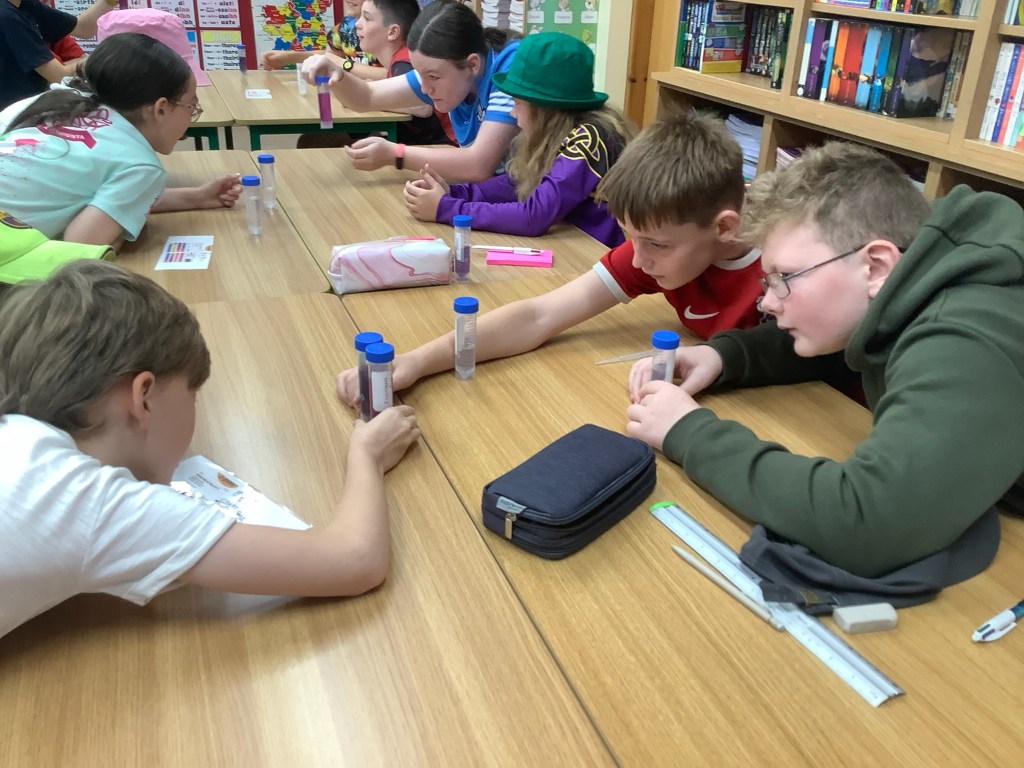
Last week, we were delighted to welcome Benny to our classroom to present 2 workshops. The first workshop was called Biodiversity, Global Warming, Climate Change and Ocean Acidification. In this workshop, we learned that the PH value of our ocean is finely balanced with a PH value of 8.3 (slightly alkali). However, with global warming and increased burning of fossil fuels, carbon dioxide is getting into our oceans and combining with seawater to form carbonic acid. This is not good news for plant and animal life in the ocean as increased acidic levels will make it difficult for them to survive. For our experiment on ocean PH levels, we added vinegar, followed by red cabbage water to a sample of water. Then, using a PH strip, we tested the PH level of the sample. The vinegar had lowered the PH level due to an increase in the acidic level. To show the effects of rebalancing our oceans’ PH levels, we added bread soda to the sample and this raised the PH level. We need to be aware of the dangers associated with ocean acidification and the loss of living things if seawater drops down to PH 7. In a further experiment, we placed shells in vinegar (carbonic acid) and almost immediately, we observed the breaking up of the shell. Acid will harm anything with an outer shell so if our oceans drop in PH value to become more acidic, any marine creature with a harder outer shell will suffer. Therefore, we need to stop burning fossil fuels to protect marine life.
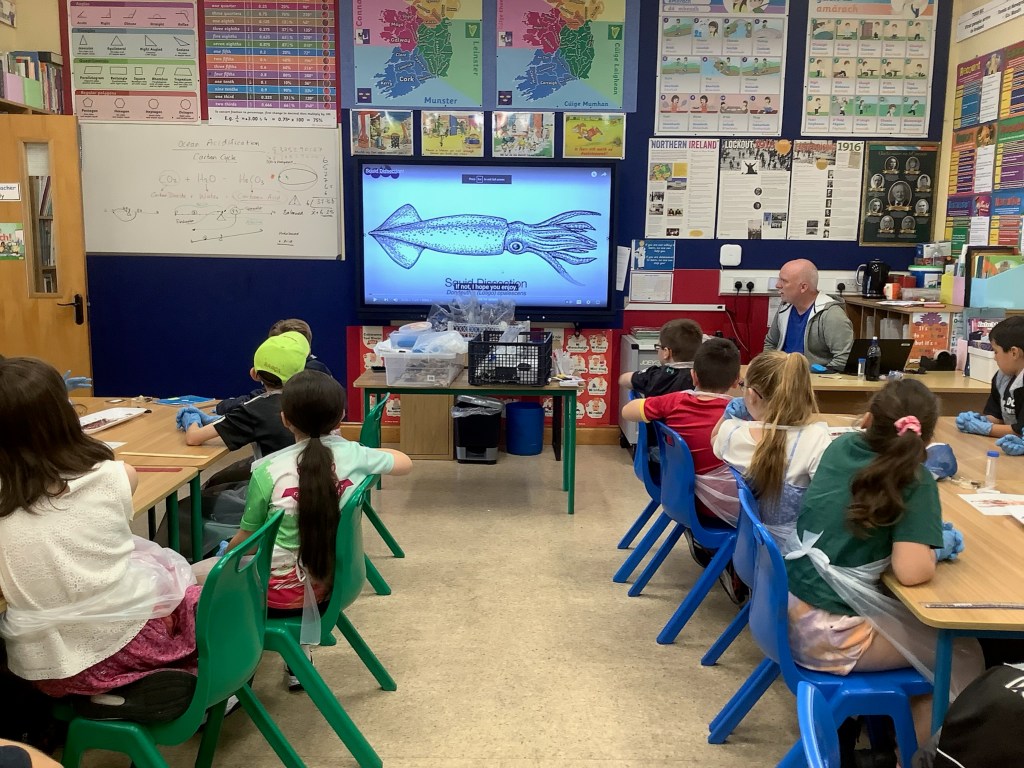
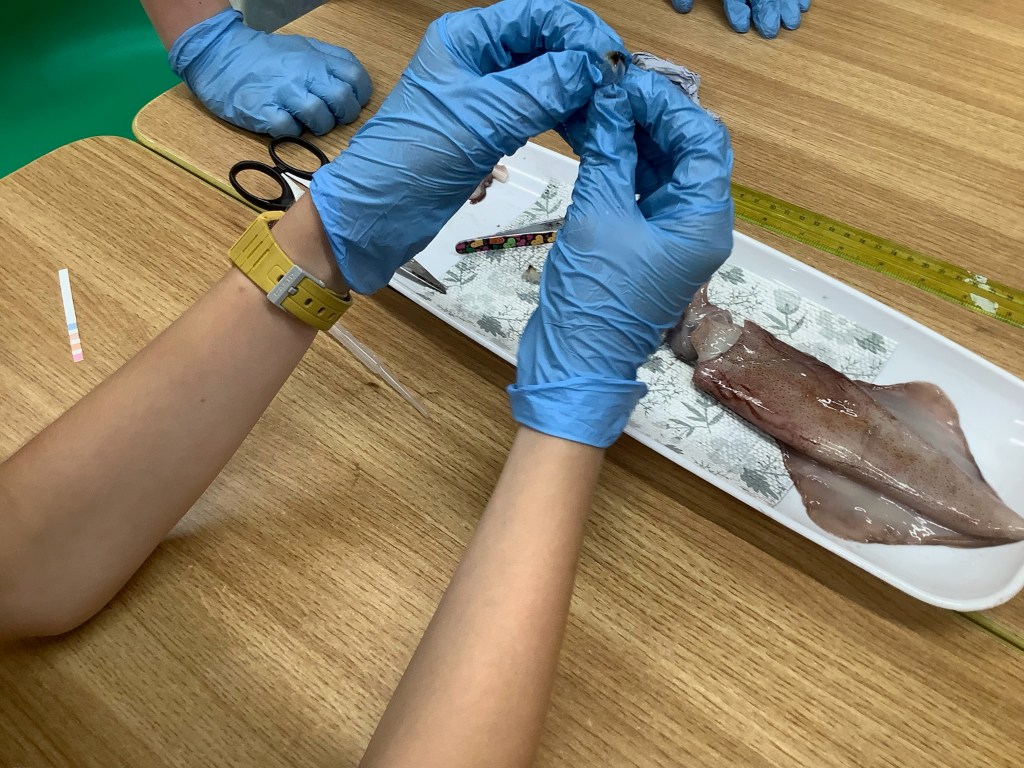
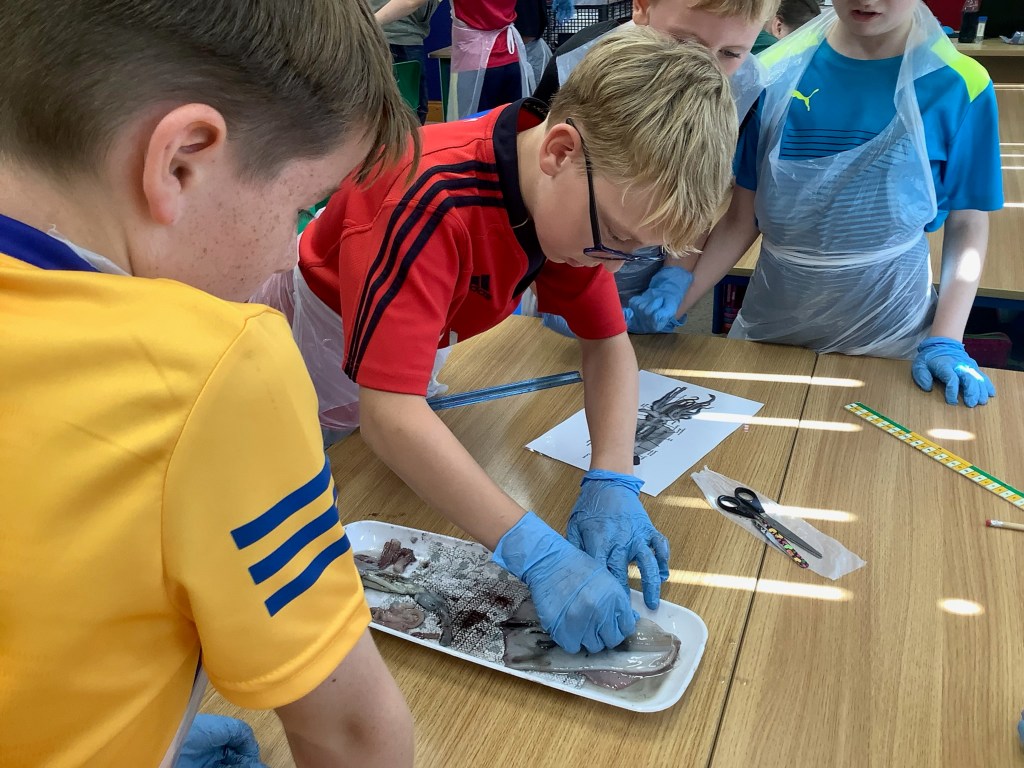
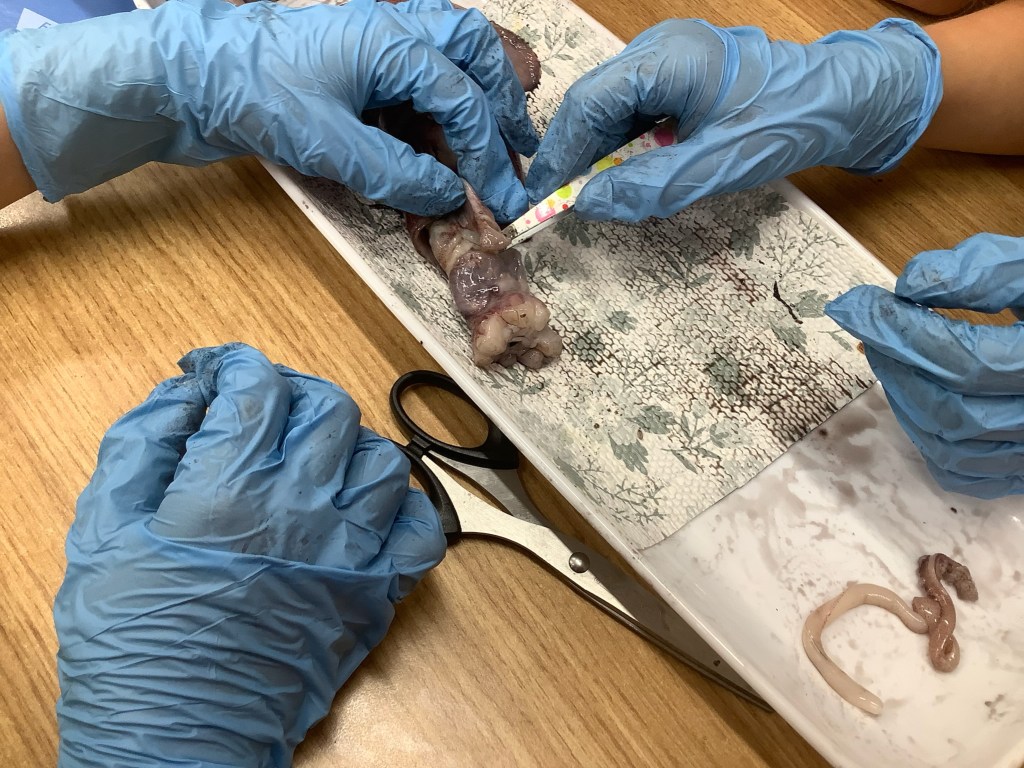
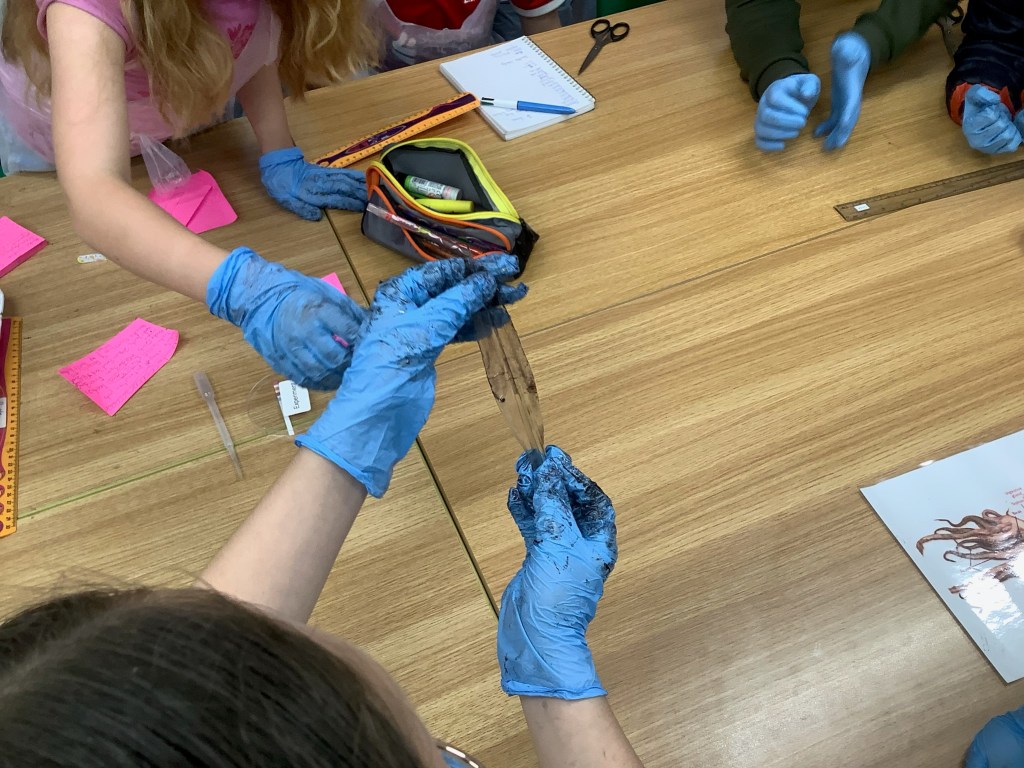
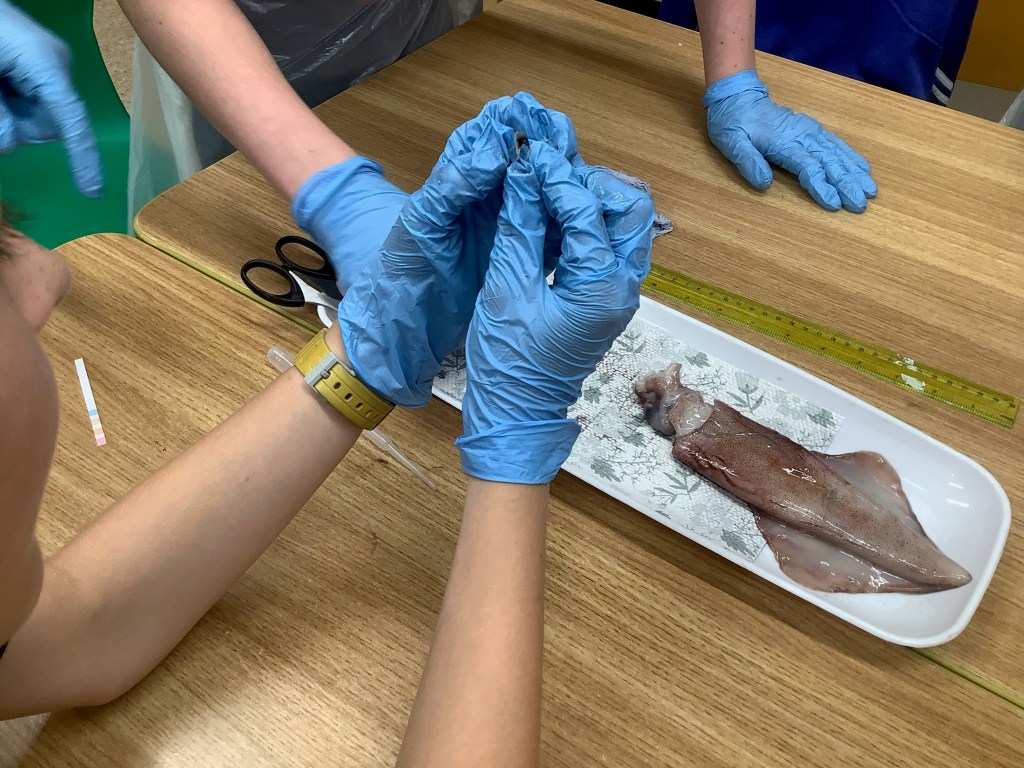
In our second workshop, Introduction to Marine Zoology – Squid Biology and Dissection, we explored the squid. Benny told us lots of interesting things about the squid – it is a mollusc or cephalopod and also known as calamari, it is nocturnal and feeds on small marine creatures and zoo plankton, it has 8 arms and 2 tentacles with suction cups at the end of each tentacle, it has chromatophores in its body which help it to camouflage, etc. Then, we moved onto dissecting a squid and this was so exciting. We noted the triangular fins, and the buccal cavity when we cut off the arms and tentacles. We removed the beak which the squid uses to crunch its prey, and the fins which it uses to stay in the same spot or for slow swimming – neutral buoyancy. We also dissected the eye and noted its large size. Cutting up the mantle allowed us to see the internal organs, including the gills, three hearts, the mouth, and the siphon which it uses for respiration and movement. Finally, we located the radula and Benny informed us that the squid is not a true vertebrate but the radula is very like a spine. This was a really interesting workshop and we thoroughly enjoyed getting our hands dirty and slimy with our slippery squids. In the days following the workshop, we worked in groups to complete a project on the squid. In our written and oral presentations, we detailed all we had learned in the workshop and we also researched further information so we are now almost ‘squid experts’!